Showing posts with label Political Meditation. Show all posts

Thursday, 20 April 2017

The Appointment of A Yogi

What Aditya Nath's elevation means for the politics of our time.


When the most dominant political party of our times registers a massive electoral victory in India's largest province & appoints the polarising head of a monastic order as its Chief Minister, there can be no doubt about the direction in which the country's political narrative is heading.

I attempt to highlight here a few plots of this developing narrative.


Religious Animosity Will Be Rewarded: The appointment of the CM is a clear sign that promoting communal discord will not have an adverse effect on your political aspirations. Polarisation as an undercurrent  is not new to electoral politics in India, but never before has a leader been so brazenly rewarded by his/her party for spreading perennial religious animosity & hatred.
A leader, they say, leads by example. If a CM is the leader of a state, which example worth following has Aditya Nath Yogi set for budding politicians other than:  'communal polarisation is electorally rewarding'. Doesn't his appointment despite the trajectory of his political career send out a clear message of rewarding religious animosity? Doesn't it openly ask others to emulate the actions & words of the pre-CM Aditya Nath for political rewards & advancement of their political careers?
A political atmosphere that encourages the propagation of religious animosity may help political parties yield electoral benefits but is sure to leave our social fabric threadbare.


Hindutva & Its Politics Are Here To Stay: It would be wrong to assume that future elections in our polity will be fought and won only on the development plank. In the foreseeable future, elections may be fought on the 'vikas' plank but will actually be won on Hindutva: Aditya Nath Yogi's appointment has made this a surety. If UP's new government fails to make an impression with its work till 2019 (the next LokSabha polls), Aditya Nath's face & speeches will be enough to get his party home in UP, atleast. While development may not reach each house in this short period, the CM's ochre robes will keep Hindutva very much alive in the minds of the voters. Since Hindutva is the BJP's insurance policy, Aditya Nath's appointment is the premium it needed to pay to prevent the policy from lapsing. Despite all the proclamations & hashtags about 'New India', good old Hindutva is here to stay!
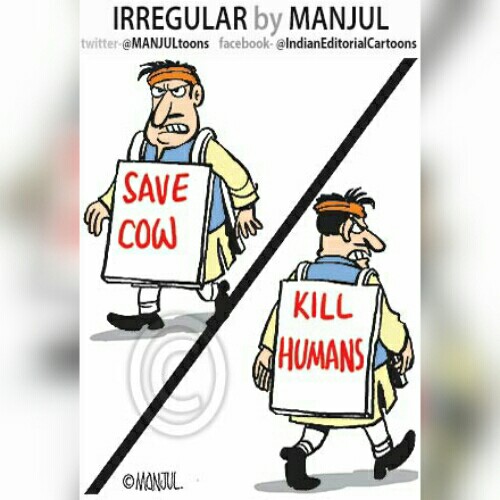


Communal Friction & Skirmishes Will Become Banal: The appointment of Aditya Nath Yogi indicates the absolute disregard his party has for communal harmony. During his de facto rule over his parliamentary constituency of Gorakhpur, a locality called Ali Nagar was renamed Arya Nagar & Urdu Bazaar was rechristened Hindi Bazaar. But, these instances of assertive Hindutva had become banal & routine in Gorakhpur under the Aditya Nath regime. Are we on a similar path where incidents of communal tension will become so routine that they will no longer arouse us to seek remedial action?
In India, we've never cared much for the rights of an individual. Minor incidents of communal disharmony donot alarm us. Nobody cares about the long term repercussions or the need for trust-building between communities after such incidents. The normalisation of communal friction can be fatally dangerous for a society. A lynching here, a skirmish there: how is a society expected to function in such a scenario? Or does the ruling party not see us as part of a society but rather only as votes in different encashable vote-banks which can be encashed by introducing a little communal friction? Unfortunately, social & communal harmony is not electorally rewarding as communal tension. A peaceful society is Hindutva's graveyard and a polarised one is Hindutva's paradise.

@theworldlymonk

Sunday, 18 December 2016

The Naiveness of Demonetisation

The Merriam-Webster Dictionary defines the word 'naive' as 'having or showing a lack of experience or knowledge & deficient in worldly wisdom or informed judgement'. More than a month after the PM demonetised 86% of the country's currency, I feel that this word is best suited to describe the entire saga. I don't claim any expertise in macroeconomic affairs nor am I a trained economist, hence the five points that I put forth in support of my argument are from a layman's perspective: supplemented by statistics and eminent opinions.


When I first heard the PM on the evening of the 8th of November, the manner in which he enunciated every tiny detail of the scheme, made it seem as if (i) for the next 50 days everything would work in a utopian manner or (ii) there would be unmitigated chaos & disarray. Gradually, as the demonetisation saga began to unfold, it became clear that the latter assumption was true & the best way to describe everything-from the idea to the implementation-was 'naive'.


Firstly, to think that demonetisation will end all black money is completely naive. As Professor Arun Kumar of Jawaharlal Nehru University's Centre for Economic Studies and Planning & author of The Black Economy in India often points out, to assume that the majority of the black money is 'kept under mattresses' as cash is naive. Prof. Kumar argues that demonetisation cannot unearth 'black wealth' which is different from 'black cash'. According to most estimates, illegal cash is just 3-5% of the total black economy in India. A committee formed by the Central Board of Direct Taxes in 2012 had explicitly stated in its report that "Demonetisation may not be a solution to tackle black money in the economy which is largely held in the form of benami properties, bullion and jewellery." To subject the entire country to a rigorous exercise without any guaranteed efficacy of the scheme is criminally naïve.


Secondly, the government underestimated the hoarders of black cash. In his first reaction to the demonetisation exercise, former RBI governor Raghuram Rajan said: '...the clever always find ways around it.' The government naively assumed that black money hoarders will have nowhere to go after demonetisation and all their black money will thus be rendered useless. However, as Rajan had predicted, black money hoarders activated all their connections, called in favours & exploited loopholes to keep their cash afloat. Arguably, the motherboard of all illegal cash in India is the business/politics-real estate-bureaucracy nexus. The government failed to comprehend that this nexus has a strong symbiotic relationship and it won't let demonetisation unfold in an unbiased & utopian manner. The government naively assumed that those with black money are 'societal orphans': with no one to turn to during a crisis like demonetisation; when, in fact, the very black money that they hold makes them the most well-connected individuals in society.

Third, the government naively endowed the not-so-holy banks with 'absolute power' (the one that corrupts absolutely) for the demonetisation exercise. The government naively overlooked the various instances of corruption that have emerged in the banking sector at regular intervals and just assumed that they would set aside their usual malpractices and function in the most idealistic manner while being colossally overworked at the same time. Even a cursory look at the allegations that surfaced against banks & bank employees in the last one year itself should have dissuaded the government from bestowing them with such exclusive powers. In October of 2015, a news channel reported how Bank of Baroda had facilitated hawala transactions to the tune of Rs. 6000 crores. A CBI investigation is underway. In the same month, CBI registered cases against unnamed IDBI Bank officials for sanctioning a loan of Rs. 900 crores to Kingfisher Airlines despite its negative credit rating. One cannot but assume that the piling NPAs across banks are partly due to the collusion of bank employees. In its monthly performance report, the Central Vigilance Commission, in April 2016, stated that it had registered 149 cases of corruption against various bank employees: ranging from part-time sweepers to Chief Manager. Even if one were to argue that these allegations are only against a minuscule minority of bank employees, shouldn't it have made the government think twice before giving them sole ownership of the new currency? Moreover, wasn't it naive on the part of the government to assume that once given such absolute authority, the banks wouldn't misuse it and won't go rogue?


Fourth, the government naively forgot to consider the hardships rural India would face during the entire demonetisation exercise given the poor coverage of the banking system in these areas. According to RBI figures (Aug 2016), only 38% of total bank branches in India are in semi-urban & rural areas. Similarly, only one-sixth of the total 2,01,182 ATMs in India (June 2016) are in rural areas. Due to such low density of the banking system, rural Indians largely depend on banking correspondents & regional co-operative banks for their monetary needs. Though the co-operative banks were rightly denied new currency (they are mostly controlled by regional politicians), shouldn't the government have made special alternate arrangements for rural areas? Moreover, the timing of demonetisation couldn't have been worse for rural India: it came at the beginning of the Rabi sowing season when farmers need cash-in-hand the most. The government added to the woes of rural India when it discontinued exchanging of notes suddenly and before the pre-decided deadline. The government naively overlooked the fact that most of rural India is unbanked and doesn't have bank accounts to deposit cash. A Twitter user very aptly pointed out that the government should have kept in mind 'Gandhiji's Talisman' (found in all NCERT textbooks) to understand rural India's plight before imposing demonetisation.


The government exhibited its fifth naivety when it began propagating cashless payments when the demonetisation-induced cash crunch hit people. The government of a country which lacks even basic economic literacy naively assumed that there is widespread digital literacy and everyone has access to cashless payments. A report commissioned by the World Bank, published in November 2015, stated that only 53% Indians have bank accounts: of which 43% are inactive. The report also stated that only a meagre 15% use bank accounts for making or receiving payments. The Pradhan Mantri Jan Dhan Yojana (PMJDY) added a whopping 22 crore accounts to India's banking system without any visible improvement in banking infrastructure or economic literacy. A majority of these accounts were either lying dormant or had zero or one-rupee balance until demonetisation. Given the above facts, how could the government be so naive as to assume that such an economy would seamlessly shift to cashless modes overnight? As far as access to cashless payments is concerned, only 39% of those who have bank accounts have an ATM/debit card. Even among these cardholders, digital literacy is low: most are unaware about the 'dos and donts' of plastic money and become easy targets for cyber criminals. In October this year 32 lakh SBI ATM-cum-debit cards were compromised due to a malware in a payment network. Awareness about OTPs, CVV, passwords, e-wallets, card skimming & cloning is extremely limited (a few Hindi newspapers use the word 'swap' machines instead of 'swipe'!!). Nothing demonstrates the government's naiveness more than its assumption that cashless India or even less-cash India is just a step away. Let's achieve rural sanitation first!!


In conclusion, one does wonder whether anything was planned or thought out about demonetisation other than the PM's speech! New notifications issued each and every day have made a mockery of the RBI and the Finance Ministry. The government keeps changing the narrative of demonetisation each time it finds itself in a spot. Deadlines are arbitrarily withdrawn, and illogical and varying time-frames are being given for normalisation. The PM revealed his naivety when he announced that it would take only 50 days for currency and liquidity to return to the economy. As per the most optimistic figures, it may take atleast 95 days just to bring the equivalent of the demonetised currency back into the economy. Who knows how long it might take to bring back the pre-demonetisation liquidity? Certainly not fifty days.


Follow: @theworldymonk


Tuesday, 16 August 2016

Loud Silence on Independence Day

Our Prime Minister is a voracious public speaker. Statistically speaking, the PM gave a speech every 45.6 hours in the first two years of his tenure. However, on many occasions he has shown that he is not a discerning speaker. He has often failed to differentiate an 'election-rally speech' from a 'solemn occasion' speech. This year's Independence Day speech is a case in point. The PM was speaking to voters, not citizens.


Over the past two years, we've heard the PM speak at numerous ceremonies, national & international events and rallies. More often than not, he has spoken as if elections were imminent somewhere. A large portion of his speeches have been a eulogy of his government or an uncouth critique of previous governments. So, when he took the dais this Independence Day, the nation expected a speech which was at least somewhat, if not drastically, different from those he had delivered in the past. But, unfortunately it was the same 'electoral campaigner-in-chief' who spoke from the rampart of The Red Fort, not the Prime Minister. Every PM has used the Independence Day speech to highlight the achievements of his/her government. But, no PM has dedicated almost two-thirds of the speech to it.

In May 2016, a special event was held to celebrate the two years of the central government ('Ek Nayi Subah'). Less than a fortnight ago, the PM spoke at length about his government's achievements on the completion of two years of the 'mygov' app. Despite these and several other platforms through which he could have/had praised the functioning of his government, the PM decided to make it the central theme of his I-Day address. What is baffling is that if one were to exclude the short introduction and conclusion of the speech, there was nothing that was new or made it seem like an I-Day speech.

The PM could have talked about the tensions in Kashmir-whether the government had planned any confidence building measures or what had gone wrong or what would be his government's future policy on the issue, et al. Instead he spoke about the prices of LED bulbs. The PM could have assured the Dalits in his home-state of their safety and equal protection under law. Instead he spent time talking about online booking of railway tickets. The PM could have spoken about his stand on caste-based reservation stirs in Haryana & Gujarat and whether the government was formulating any policy about them. But, he chose to speak about the two-year old Jan Dhan Yojana instead.

The PM seems to view each public speaking event-irrespective of the occasion- as an opportunity to narrate his government's achievements. The PM fails to realise that in today's information age, the citizens donot want the PM to burden them with statistics, but rather take a stand on issues that matter and talk to the nation-not merely to the electorate. The citizens donot want the PM to be merely the 'chief public relations officer' of the government, but rather to be involved in the affairs of the nation at every step without trying to skip the inconvenient ones. Lal Bahadur Shastri talked about the Pak invasion in his 1965 I-Day speech; PV Narasimha Rao talked about the critical state of the econony in his I-Day speech; AB Vajpayee talked at length about Kashmir in his 2003 I-Day speech; US President B. Obama talked about gun-violence in this year's State of the Union address. Our PM should remember that leaders are those who navigate tough issues, not those who merely run media blitzkreigs.

The nation expected an I-Day speech that would be soothing for some, reassuring for some, a stern message for some, enthusiasm for others. Unfortunately, this year's Independence Day speech was a narration of information, not a conversation.

Follow: @theworldlymonk

Thursday, 7 July 2016

How to Survive & Succeed in the Modi Cabinet: A Quick Guide

In Indian politics the only thing that comes close to the excitement & anticipation of an 'election results day' is a union cabinet reshuffle. Nervous netas & MPs keep their fingers crossed amidst hectic lobbying; journalists speculate & calculate even as the common citizen is in awe of the entire exercise.


The recent Modi government cabinet reshuffle has thrown up quite a few surprises and shocks. So, for the sake of our netas who are either trying to get into the cabinet in the future or trying to save/upgrade their ministerial chair, here's a quick guide on how to survive and succeed in the Modi cabinet.

(i) Love corporates (especially Adani). This is absolutely essential. Prakash Javdekar- the only person who got a promotion in the reshuffle, got it within 48 hours of cancelling Adani's Rs.200 crore green penalty. He did everything he could in the last two years to make 'environmental issues' the last thing the big businesses would have to worry about. From abolishing mandatory environmental clearances to removing limits on mining in protected areas, Javdekar, it seemed, was Minister of Corporate Affairs functioning from the Environment Ministry office! The PM absolutely loved it.

(ii) Keep your mouth shut (also your dad's). The PM likes speaking. A lot. However, he doesn't like hearing other people do the talking. Unfortunately, Jayant Sinha realises this only now as he sits in the Civil Aviation ministry. Perhaps, he spoke too many times to the media or was it his...father? Yashwant Sinha's criticism of Modi's Pakistan policy could have led to his son's undoing. Whatever the case, the PM will punish the son for the sins of the father and no Harvard Business School degree will help. So, zip it if you want to become or remain a mantri that matters.

(iii) "You have a right to work only, not to the fruits there of", The Gita 2:47. The likes of Piyush Goyal, Dharmendra Pradhan & Nirmala Sitharaman worked as much as the PM travelled. But, they didn't get a promotion. Their only consolation: chapter 2, verse 47 of the Gita. All claims of the government that performance was the only criterion of the reshuffle fell flat. All fears that the PM prefers only a small and exclusive coterie as his Cabinet now seem true.

(iv) Have a healthy vote-bank balance (especially caste vote). If you're from a state that is poll-bound, your chances of becoming minister go through the roof. Apparently, the PM believes that people will vote for the BJP if their region/state or caste/community is represented in the union cabinet. Interesting. By that logic all Gujaratis and all people with the surname 'Modi' will vote only for the BJP- after all the PM heads the cabinet! If you're a caste leader, good for you! You dont need to do much to get a berth either. Whether you're suitable for a portfolio or not doesn't matter. Some ministers get work done. Others are appeased to get votes on the ground.

(v) Avoid an overdose of controversies. A few controversies are good for publicity and propaganda. So, the likes of Giriraj Singh and Sadhvi Niranjan Jyoti survived the axe. But, an overdose of controversies will ruin your mantri career. Eg. Smriti Irani. A controversial statement here and there is not a problem for the PM. But, when your every action generates a controversy, no amount of RSS appeasement or saas-bahu style theatrics in Parliament will help you. Sorry Dear Smriti Irani ji.


Keep these in mind and hope for the best! And always remember the classic line from 'Yes Minister': "the prime minister giveth and the prime minister taketh away."


Like: facebook.com/theworldlymonk
Follow: @theworldlymonk

Sunday, 19 June 2016

4 Reasons Why Raghuram Rajan's Exit is Disgusting and Ominous

I am no economist. I claim no expertise in macroeconomics. But, here are 2 reasons why an economics layman like me is disgusted with the way RBI Governor Raghuram Rajan has been shown the door by the Modi government & also 2 reasons why this is ominous for India as a country and as an economy.


The Exit

(i) Every government makes political appointments to institutions, agreed. Every government wants its nominees in crucial posts, agreed. The Modi government since its inception had a problem- removing Congress appointed Governors of states was easy: shunt them to the North East and they'll resign. But, how do they sack the Congress appointed RBI Governor- a renowned and prodigious economist? They couldn't. So, instead there was constant friction between Arun Jaitley and Rajan- on interest rates, public debt management, etc. Rajan was no 'yes-man' and Arun Jaitley is no economist.

(ii) Every finance minister wants an RBI governor who agrees with his broad economic agenda and frames policies according to the economic path the government has chosen to tread, agreed. Even P Chidambaram had some problems with D Subbarao, agreed. So, then why not just openly say that 'Mr. Rajan and the government hold divergent views on how the economy should be handled and therefore we don't want to renew his tenure'. Simple. Why use foul-mouth expert Subramaniam Swamy as a puppet to spread lies and mount personal attacks on Rajan in a bid to create a false background for his exit? Disgusting. Surely the PM and FM wanted Swamy to start the shameful trajectory which would then lead to Rajan gracefully turning down a second term. Can the Modi government publicly claim that they offered Rajan a second term and that he declined?


The Future


(iii) The governor of any central bank doesn't carry the economy of the country on his shoulders, agreed. No economy is a one-man show, agreed. But, if the Modi government claims that PM Modi's face alone is a confidence-booster for investors and rating agencies around the world, can't the same be said about the face of the RBI governor? Raghuram Rajan's name and face alone had appreciated the Rupee against the US Dollar on his very first day in office in September 2013 (₹67/dollar to 65/dollar). Rajan's exit is ominous for the Indian economy- if the Indian government doesn't want 'the person who predicted the 2008 global recession' and 'the person who was the youngest ever Chief Economist at the International Monetary Fund' as the governor of its central bank, investors will think twice before investing. Whirlwind world tours by our PM will not help. Flying around the world shouting 'Make in India' is one thing and appointing the right people for that to happen is quite another.

(iv) Extremely few politicians like to be criticised, agreed. We often like to work with like-minded people, agreed. Elected leaders in our country think they should be the unquestionable authority till the next election, agreed. But,  in Rajan's exit, the Modi government has lost the sole opportunity it had to quell the perception that the PM likes to surround himself and work with only sycophants. Rajan was probably the only independent voice left in the executive branch of the government; he wasn't a Modi cheerleader and his evaluation of the government was unbiased and civil- never reeking of unnecessary admiration or awe. Rajan's exit is ominous for India as a nation- this central government of ours does not respect knowledge or talent, it does not respect institutions, it does not want a single critical voice around it. This government has shown that it rewards only fierce political allegiance and sycophancy, it demands unqualified obedience from those within it and it feels it can do no wrong, ever.


Follow: @theworldlymonk

Like: facebook.com/theworldlymonk

Wednesday, 15 June 2016

New Asana: Baba Ramdev's Silent Shift

On 1st June 2011, as Baba Ramdev's plane landed at Delhi's Palam airport, three Union Cabinet ministers stood waiting with pleasantries and a warm welcome. Their agenda: to convince the ascetic to call off his indefinite fast against political corruption & black money which was scheduled to start in a couple of days. Baba Ramdev did not budge. Fast forward to 3rd May, 2016. Baba Ramdev visited RJD chief Lalu Prasad Yadav at his residence with a complimentary assortment of popular Patanjali Ayurvedic products and sought his endorsement. Lalu Prasad Yadav is convicted of corruption charges and is out on bail facing a six-year ban from holding public office.

Baba Ramdev has quietly re-tuned his priorities. His political aspirations seem to be withering away in the face of increasing profits from his herbal/Ayurvedic mega-business. Baba Ramdev, it appears, has decided to set aside political animosities- and the risks & struggles that come with it- to focus on expanding his FMCG empire and becoming a health and business icon rather than remaining a mere political disrupter.


It is human tendency (in a peaceful society) to always strive first for economic power. Having achieved comfortable financial security, an individual then tries to get substantial social power and only then tries his luck at achieving political power. Baba Ramdev was a household name in India by 2005-06 when he was being beamed into homes every morning on the 'Aastha' channel. His popularity as a yoga guru was at its peak. When you're an extremely popular actor, sportsman or a public figure, it is extremely difficult to resist the temptation of converting your fan following into your political supporters. Ramdev fell for this temptation and took the plunge into anti-establishment politics in 2010 when he set up the Bharat Swabhiman Party (later, a Trust) and aligned himself with issues such as the Jan Lokpal, 'Indian black money stashed abroad' & political corruption. This led to the 2011 indefinite fast and the eventual brutal crackdown by the government on his agitation. In the years that followed, the Congress left no stone unturned in making life difficult for Baba Ramdev. In the 2014 general elections, Ramdev openly campaigned for the eviction of the 'corrupt' Congress from power and successfully in favour of the BJP and Narendra Modi.

A lot has changed since. Baba Ramdev's pet issue of 'Indian black money stashed abroad' has received little attention from the Modi government. Modi has not tried to involve Ramdev in any political decisions or paid any attention to his political demands. Baba Ramdev's disillusionment with the Modi government has been seen in his public statements on quite a few occasions since 2014-the latest one being only two days ago (13th June, New Delhi) when he clearly expressed dissatisfaction with the Modi government's attempts to bring back 'Indian black money stashed abroad'.


Meanwhile, Baba Ramdev's Patanjali Ayurved Limited (PAL)  continues to prove every analyst wrong with its growth and profitability. Within a year of the general elections of 2014, Ramdev had begun to aggressively expand and promote the Patanjali brand after having previously ignored it for his political escapades for more than a couple of years. From selling only in-house Ayurvedic medicines to now outsourcing chocolate and energy bars, Patanjali has taken the FMCG market in India by storm. Its net profit rose from ₹95.19 crore in FY 2013 to ₹196.31 crore in FY 2014. Sales increased from ₹843.92 crore in FY 2013 to almost ₹2k crore in FY 2015. Baba Ramdev can now be seen on almost every India television channel promoting Patanjali's products- from whole grain biscuits to anti-wrinkle creams to pure mustard oil. Baba Ramdev has clearly chosen to shift his public visibility from the political sphere to the sphere of the market and commerce.


Having once vowed to rid 'Bharat Mata' of corrupt politicians, Baba Ramdev is today choosing to eliminate the political acrimony that he accumulated during his previous political campaigns. In the past one month alone, Baba Ramdev has personally called upon two leaders (Lalu Prasad Yadav & UP CM Akhilesh Yadav) who were not only opposed to his political alignment during the general elections in 2014, but are also PM Modi's biggest political opponents in the two most populated states of northern India. The reason for these meetings has been solely commercial-as any business head would meet a politician.


Surely it seems that Baba Ramdev has decided to withdraw from political sloganeering and is no longer interested in creating enemies that cause his fledgling Ayurvedic empire any trouble. He seems to have realised that political alliances with the BJP and the resultant animosity with other politicians has done the economics of Patanjali Ayurved no good. 


Perhaps it's time to let go of politics, feels the ascetic.


Follow: @theworldlymonk

Like: www.facebook/theworldlymonk

Friday, 3 June 2016

After The Dust Settles: West Bengal

The electoral euphoria in 5 states- Assam, West Bengal, Tamil Nadu, Kerala & Puducherry- ended a fortnight ago. As the chief ministers take the constitutional oath and the MLAs lobby to get a ministerial berth, The Worldly Monk takes a closer look at each state to help you understand the ingredients of each victory and defeat.

Today, let's understand what led to the voter pressing the EVM button in favour of the Trinamool Congress in West Bengal.


WEST BENGAL
294 seats.
Majority Mark: 148

All India Trinamool Congress (AITC/TMC) - 211 (two-thirds majority)

Left Front {Communist Party of India (Marxist) - 26, Communist Party of India - 1, Revolutionary Socialist Party- 3, All India Forward Bloc - 2} - 32

Indian National Congress - 44
Bharatiya Janata Party - 3
Gorkhaland Janmukti Morcha - 3
Independent - 1


Chief Minister: Mamata Banerjee (AITC)

The Deciding Factors: What worked for the Trinamool Congress and what ruined it for the Left Front


The Mamata Factor. Running a presidential-style campaign ("I am the candidate in all 294 seats", she declared frequently and vehemently), Mamata Banerjee almost single handedly led her party to victory amidst allegations of corruption and political violence. A post-poll survey conducted by the Centre for the Study of Developing Societies (CSDS) & Lokniti reveals the importance of the 'Mamata' factor. A whopping 77% of those voting for TMC did so because of Mamata Banerjee; her approval ratings as CM also increased from 34% in 2011 to 60% in 2016. Almost a third of the respondents felt she did a better job than West Bengal's longest serving CM, late Jyoti Basu. So, not only was there no anti-incumbency but rather a pro-incumbency among the voters in favour of Mamata Banerjee.


The Left in disarray. With no mass leader in the ranks, an ageing leadership & no clarity on the CM candidate, the Left Front was always struggling to gain momentum. The very culture of political violence, intimidation and rural strongholds that it used to stay in power for more than three decades was now a potent weapon in the hands of the TMC. TMC was now the stronger cadre-based party and the Left knew it going into the polls. Nobody bet their money on the Left in the polls, but nobody saw them doing this bad either.


Mamata's 'MW' factor. Lalu Prasad Yadav famously made the 'Muslim-Yadav' (MY) factor his strength in Bihar. Now it seems Mamata has her very own 'Muslim-Women' (MW) combine to win her elections. The CSDS-Lokniti post-poll survey reveals that 51% Muslim voters & 48% female voters chose the TMC. Also the poor voted decisively for the TMC (52%) and are no longer the Left's traditional vote-bank. Add to this the TMC's tight grip over the rural areas and the Left has nowhere to go in West Bengal.


The Left Front-Congress 'alliance' failed miserably. Not only did Congress end up winning more seats that the Left (which the Left never would have imagined), the Left is, for the first time in West Bengal, party no. 3 in the state assembly. The alliance got only 65% of the anti-TMC vote and more importantly, in the alliance, the committed Left votes transferred to the Congress, but the not-so-committed Congress votes instead went to the TMC. Ideologically, arithmetically & politically- the 'alliance' was a disaster for the Left.


The Left needs to do some serious political recouping if it wants to stay relevant in West Bengal.


Follow: @theworldlymonk
Like: facebook.com/theworldlymonk


Wednesday, 25 May 2016

After The Dust Settles: Assam

The electoral euphoria in 5 states- Assam, West Bengal, Tamil Nadu, Kerala & Puducherry- came to an end last week. As the chief ministers take the constitutional oath and the MLAs lobby to get a ministerial berth, The Worldly Monk takes a closer look at each state to help you understand the ingredients of each victory and defeat. Beginning today with Assam, the series 'After The Dust Settles' will analyse, in a nut-shell some of the five states to try and determine what led to the voter pressing the EVM button in favour of the winning party.


ASSAM

Total Seats : 126
Majority Mark : 64

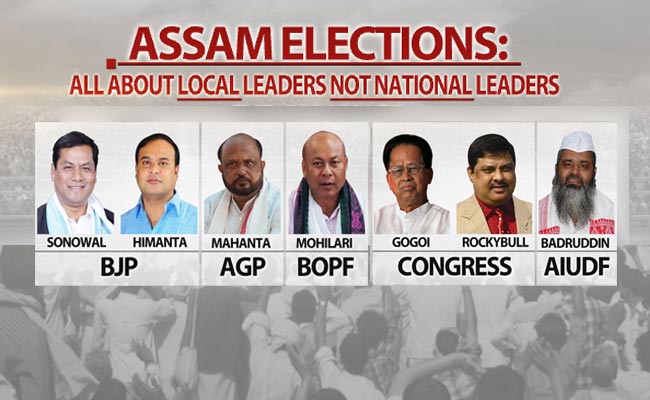
NDA - 86 (BJP 60, AGP 14, BOPF 12) (two-thirds majority)
Indian National Congress - 26
AIUDF - 13
Independent - 1

Chief Minister: Sarbananda Sonowal (BJP)


The Deciding Factors: what worked for the BJP & what went wrong for the Congress


15 years of anti-incumbency. The eternal enemy of politicians, anti-incumency, of three consecutive terms in the case of Chief Minister Tarun Gogoi, worked against the Congress and gave BJP a headstart. The initial confidence for the BJP cadres was derived from the mood of anti-incumbency in Assam. An ageing CM, facing accusations of nepotism added to the misery.


Strong consolidation of Hindu votes in favour of BJP & its allies. A post-poll survey conducted by the Centre for the Study of Developing Societies (CSDS) in partnership with Lokniti revealed a record 63% Hindu vote consolidation in favour of the BJP. A major chunk of the Congress' Hindu vote decisively shifted in favour of the BJP. In simplistic terms, BJP gained from a consolidation of the Hindu votes in its favour and the division of Muslim votes between the Congress and the All India United Democratic Front (AIUDF) led by Badruddin Ajmal.


Himanta Biswa Sarma. Congress MLA from Jalukbari constituency in Assam from 2001-2015, Sarma held various portfolios in the Tarun Gogoi government and was widely appreciated for his work in the Health & Education ministries. Often seen as Gogoi's 'right-hand man', Sarma had a falling out with Gogoi in the run-up to the elections. Various reasons were cited including Gogoi's preference for his son over Sarma as his political heir, Sarma's bitter interactions with Congress vice-president Rahul Gandhi, and also Sarma's perception of the anti-Congress sentiment in the state. Sarma joined the BJP in August 2015 along with nine sitting MLAs of the Congress. As convenor of the BJP's campaign, he played a crucial role in bringing down his former boss Tarun Gogoi.


BJP made the 'Bangladeshi immigrants' issue its war cry. Having been raising the illegal immigrants issue very vocally for the past many years, the BJP made it the centrepiece of its campaign in Assam. People related to the issue both politically and emotively- bringing people out to vote & in BJP's favour.


Coalition & CM candidate. BJP learnt its lesson from Bihar & projected Sarbananda Sonowal (formerly an Asom Gana Parishad leader & the then Union Sports & Youth Affairs Minister in the Modi government) as the Chief Ministerial candidate well in advance. Also, the BJP's pre-poll alliances with the Bodoland People's Front (BPF) & Asom Gana Parishad (AGP) helped it consolidate the anti-Congress vote.


No wonder then, that the BJP-led NDA is now in power in Assam with a two-thirds majority in the legislative assembly.


(Next: West Bengal.)


Wednesday, 18 May 2016

2 Years of Modi: Things We Want To See Less Of


On 26th May, 2014 Narendra Damodardas Modi became the first Indian prime minister to be born in independent India (Rajiv Gandhi, India's youngest PM, was born in 1944.)

The two-year tenure has seen headlines for reasons both good & bad; there have been voices of condemnation and congratulation.

In the preceding post, I had discussed the things I felt we needed to see more of from this government. Now in the concluding part of this two-part analysis of the two years of the Modi government, I wish to highlight the not-so-good aspects of the tenure so far: the things we want to see less of.


The Things We Want To See Less Of:


Lesser rallies, photo-ops & campaign-style speeches. We would prefer the government working seriously behind closed doors and the people being able to see its effect on the ground rather than more rallies, speeches and selfies and nothing substantial on the ground. There were several print media reports that highlighted the plight of farmers whose nascent crops were destroyed to prepare the stage for the PM's inauguration rally for the 'Fasal Bima Yojana' in Madhya Pradesh. Similar was the plight of farmers in Balia in Uttar Pradesh when their crops were cleared to make way for the PM's inauguration rally for the 'Ujjawala' LPG scheme. It's ironic that policies and programmes for the rural and farmer population were inaugurated by 'uprooting' their source of livelihood.


Lesser political embarrassment. The recent controversy in Uttarakhand left the BJP & the NDA government red-faced after the entire 'circus' played out. No doubt that the very purpose of a political party is to capture power but this entire episode reminded one of the Indira Gandhi era when all provincial opposition governments were dismissed just because the people had chosen her to lead the central government. Please focus on the government you're democratically given charge of.


Lesser stinginess in social spending. Economist Dhirendra Kumar in this article points out how the interest rate cut in the Senior Citizen Saving Scheme shows a lack of compassion in the government's policy decisions. The rate-cut saves the government a mere ₹150 crores annually- nothing significant when it comes to the vast amounts governments spend on social security worldwide. Similarly, the EPF fiasco will probably be remembered for the multiple rollbacks- withdrawal tax, withdrawal limit, compulsory pension investment, EPF interest rate-cut & finally back to where it was. Why mend something that ain't broken? Also, as far as rate cuts go, the government needs to remember that fiscal discipline is one thing and stinginess is quite another.


Lesser focus on divisive issues. The party and the government can surely do better than to let issues such as 'nationalism', 'Bharat Mata' & 'the holy cow' hide the real work they're doing. The JNU incident and the Jat agitation in Haryana highlighted the glaring double standards of the government on the issue of nationalism. Arsonists who were part of a vote-bank were condoned, while students who professsed a different ideology were labelled seditious. The government needs to understand that such blatantly superficial nationalism is of no use and will only malign the government and question its seriousness to govern.


Lesser foreign trips. Last, but in no way the least, the PM needs to limit his foreign sojourns. He needs to remember that his desire to become a world leader needs to begin with a highly successful administration at home. No matter how many or how few rupees are spent, no matter how many MoUs are signed in the foreign trips; the perception among the masses is negative. And no one understands the importance of perception for a political leader more than our PM.


(Part 2 of 2)

(Concluded.)

Tuesday, 17 May 2016

2 Years of Modi : What We Need More Of


It's been two years since Narendra Damodardas Modi took oath as India's 14th Prime Minister with his party, the Bharatiya Janata Party, winning a majority on its own- a first in three decades (Rajiv Gandhi-led Congress had won the highest-ever tally of 404 seats in 1984 thanks to a sympathy wave in his favour after Indira Gandhi's assassination.) 

Only diehard fans of the PM/BJP can say they've liked everything the government has done in the past two years & perhaps only the perennial critics can claim that the government has done nothing right. So, let's take the middle path and try and analyse the two years of the NDA government in this two-part essay in terms of 'what we would like to see more of' & 'what we would prefer less of'.


What We Want More Of:


More ministers who mean business. The government desperately needs ministers who focus on their ministry/portfolio and not daily politicking. The job of propagation of party ideology & party affairs should rest solely with official party spokespersons and office-bearers. The ministers should concern themselves only with matters of policy, legislation & government business. Ministers commenting on flimsy issues only end up embarrassing themselves & giving the perception that they are disinterested in their portfolio/s and donot take government business seriously. Top performing ministers such as Piyush Goyal & Suresh Prabhu have not only let their work speak for themselves but have not made one comment out of place. Whereas on the other hand, ministers such as Mahesh Sharma, Sadhvi Niranjan Jyoti among others, it seems have spent more time in front of TV cameras/mics than behind their office desks. We need yearly appraisals of ministers just like any other organisation and the PM should not shy away from more frequent cabinet reshuffles based on performance.


More interactions with the state governments. The PM has frequently used the term 'Team India' in the context of cooperative federalism. What we would like to see in the remainder of the term is more meaningful and frequent conversations with the state governments to tackle their specific problems and demands. We saw a glimpse of this when recently the PM held one-on-one interactions with the CMs of Karnataka, UP & Maharashtra on the issue of drought. We want see more of such interactions & partrnerships on issues such as Naxalism, river-water sharing, insurgency in the North-East, caste-based reservation stirs, et al. If the PM wants to be the 'captain' of 'Team India', he has to look at all departments of the 'game'.


More speaking out by the PM on issues that matter. Tweets on the most minuscule of issues and conspicuous silence on issues that are grabbing national headlines- this strategy requires some major amendments. Narendra Modi had often referred to then PM Manmohan Singh as "Maun-mohan Singh" ('maun' meaning silent or mute). But, since coming to power at the Centre, Narendra Modi is yet to hold a press conference where he actually takes questions from the media/journalists & answers them. Notwithstanding his myriad speeches at conferences, inaugurations & rallies over these two years, Narendra Modi is yet to hold a press conference similar to those held by Manmohan Singh & A B Vajpayee where they actually answered questions posed by mediapersons.

(Part 1 of 2)

(To be continued...)

(Tomorrow - 'Things we would like to see less of'.)

Follow me on Twitter @theworldlymonk